
What the SIA’s new whistleblowing role means for security employers

New legal protections seeks to give security workers greater confidence to report wrongdoing. For employers, this is an opportunity to strengthen trust, accountability and standards across the workplace.
Security professionals are often the first to notice when something is wrong. New whistleblowing protections now make it safer for workers to raise serious concerns directly with the SIA.
For employers, the change is also a prompt to look more closely at workplace culture and consider whether people genuinely feel supported when they speak up.
Speaking Up
A strong security culture depends on people feeling safe enough to report wrongdoing before it places colleagues, clients or the public at risk.
On 2 June 2026, the Security Industry Authority became a prescribed person under the Public Interest Disclosure Act 1998.
This means workers within the private security industry may receive greater legal protection when they make a qualifying disclosure directly to the SIA.
The change covers more than permanent employees. Depending on their working arrangements and the circumstances of the disclosure, protection may also apply to other workers operating within the industry.
Concerns reported to the SIA could include unlicensed security activity, suspected fraud, criminal offences, regulatory non-compliance or risks to public safety. Reports can also be made anonymously or confidentially.
For security professionals, this creates a clearer route for raising serious concerns outside their organisation. It is particularly important where someone believes an issue has been ignored internally or feels that speaking to their employer could result in unfair treatment.
Workers who make a protected disclosure may be legally protected against detrimental treatment. This could include harassment, reduced working hours or other negative consequences. Employees are also protected from unfair dismissal when the relevant legal conditions are met.
However, not every workplace complaint automatically qualifies as whistleblowing.
A protected disclosure will generally relate to wrongdoing that the worker reasonably believes is in the public interest. A personal disagreement about working hours, management decisions or an individual employment situation may instead need to be handled as a grievance.
The distinction matters. Employers should ensure workers understand both routes and know where to take different types of concerns.
Employer Readiness
The goal should not be to prevent workers from contacting the SIA, but to create an environment where concerns are taken seriously wherever they are raised.
The SIA’s new role does not replace an employer’s internal whistleblowing process. Instead, it raises expectations around how security businesses receive, investigate and respond to concerns.
Employers should begin by reviewing their existing whistleblowing policy. It should clearly explain what whistleblowing means, what types of behaviour can be reported and how workers can raise a concern.
Reporting routes must also be accessible. Workers should not have to raise a concern with the manager involved in the suspected wrongdoing. Providing more than one reporting option can help people speak up with greater confidence.
Managers also need appropriate training. A poorly handled first conversation can discourage someone from continuing with a legitimate report. It can also damage trust across the wider workforce.
When a concern is raised, managers should listen carefully, record the relevant details and avoid making immediate promises about outcomes. Information should only be shared with the people required to assess or investigate the issue.
Employers should also make it clear that retaliation will not be tolerated. Changes to someone’s shifts, treatment, responsibilities or opportunities following a disclosure could be viewed as detrimental treatment, even where dismissal is not involved.
Strong record keeping will be essential. Businesses should document when concerns were received, how they were assessed, what action was taken and how the worker was supported. Personal information must still be handled carefully and in line with data-protection responsibilities.
The most effective whistleblowing systems are not simply legal safeguards. They are early-warning systems.
Frontline security professionals often have direct visibility of unsafe practices, licensing failures and behaviour that senior leaders may never witness. Giving them a trusted way to raise concerns can help employers address problems before they become more serious.
The SIA’s new status should therefore be viewed as more than a regulatory change. It is a prompt for security employers to look closely at workplace culture.
Policies matter. But workers will judge the organisation by what happens when someone actually speaks up.
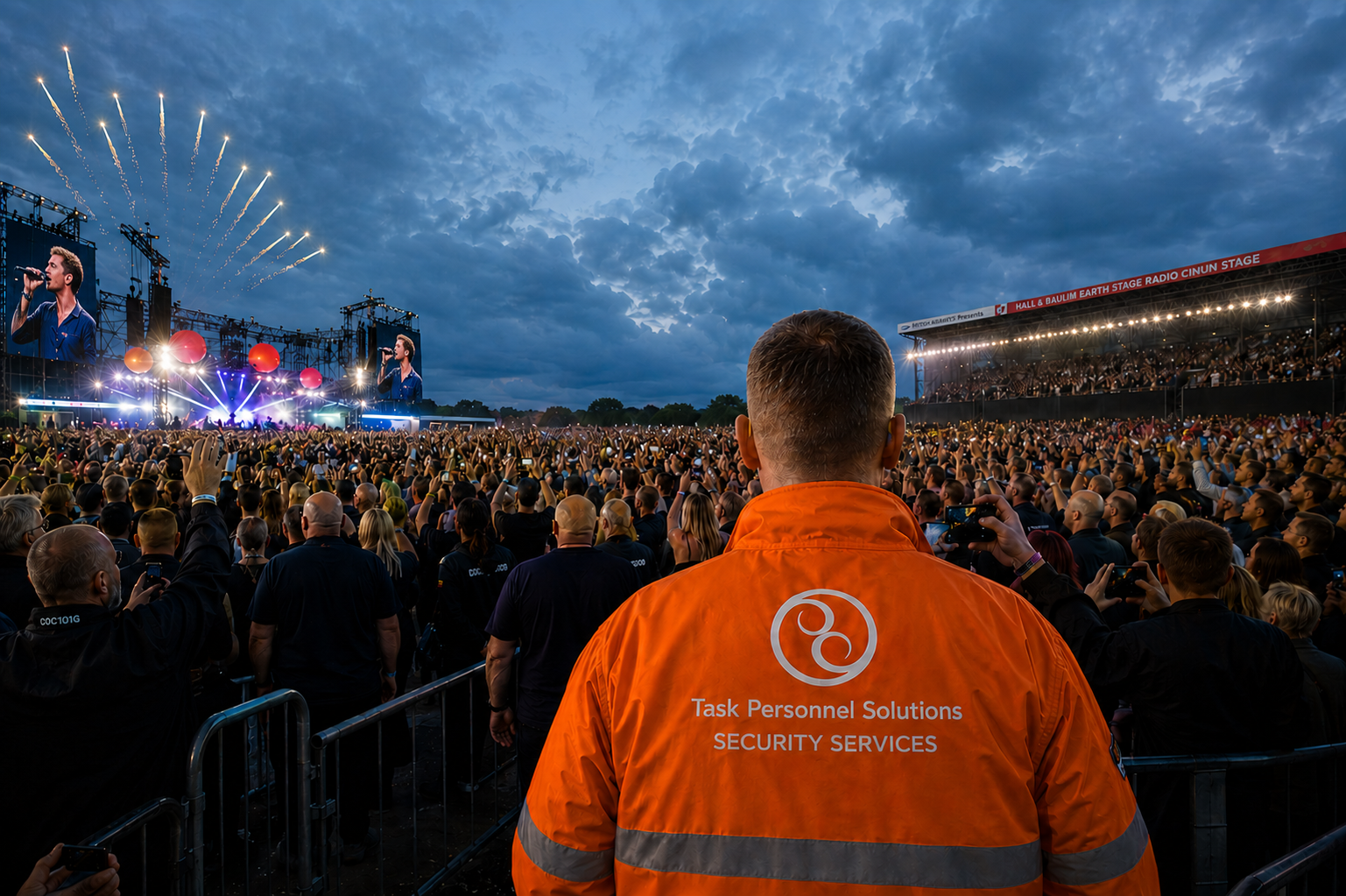
Coldplay Stadium Event
Delivering two events at this scale requires tight coordination across every part of the operation. Task Personnel Solutions managed crowd flow, access and on-site logistics with confidence, ensuring both nights ran smoothly from arrival through to exit. The result was a safe, well-organised experience for everyone attending. We highly recommend them.
— Event Operations Team & Local Council
~